
Views: 0 Author: Site Editor Publish Time: 2025-10-20 Origin: Site
Fire safety is often overlooked in daily life—until a real emergency strikes. Fires can occur suddenly, anywhere, and often with little warning. Being prepared is essential, and one of the most effective, accessible tools for tackling small fires is a fire blanket.
Unlike fire extinguishers, fire blankets are chemical-free, easy-to-use devices that can suppress flames quickly and safely. They are widely used in homes, kitchens, vehicles, laboratories, and industrial settings. This comprehensive guide will cover fire blanket types, materials, specialized uses (including welding fire blankets and glass fiber fire blankets), benefits, and how to select the right blanket for your needs.
Fires require three elements to burn: fuel, heat, and oxygen—also known as the fire triangle. Fire blankets remove the oxygen, suffocating flames.
When a fire blanket is placed over flames, it creates a barrier between the fire and surrounding air, effectively extinguishing it. High-quality blankets, like glass fiber fire blankets, withstand direct contact with flames, making them highly reliable for household and industrial fires.
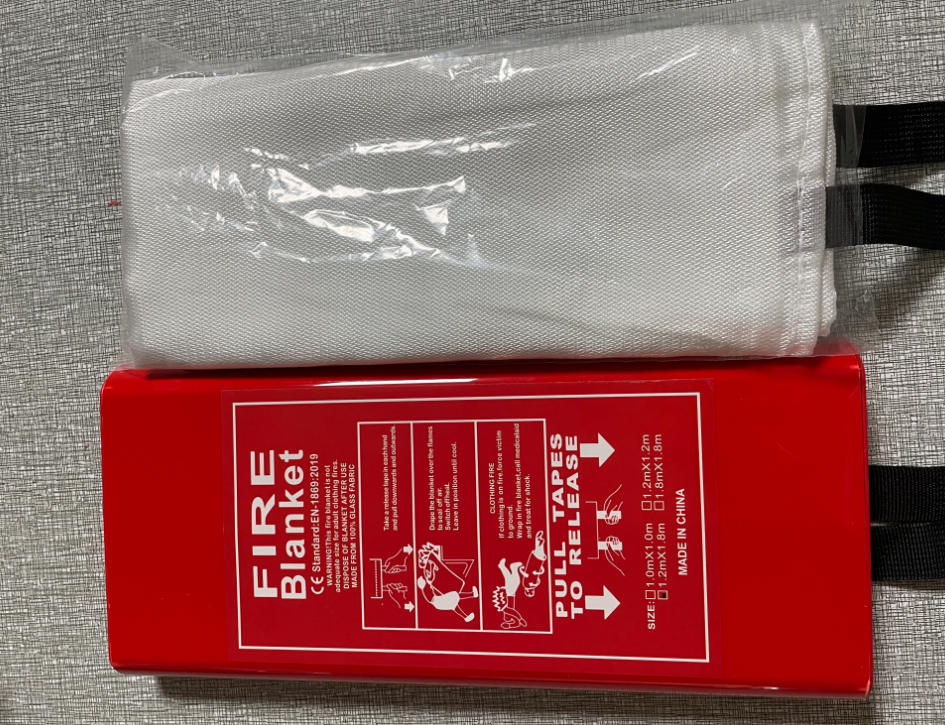
Fire blankets come in various types, each suited to specific applications. Understanding the differences helps you choose the right one for your environment.
Made from woven glass fibers.
Heat resistance up to 1000°C (1832°F).
Ideal for kitchen fires, electrical fires, and small industrial applications.
Often called glass fiber fire blankets, these are lightweight, reusable after minor fires, and easy to deploy in emergencies.
Treated with fire-retardant chemicals to enhance resistance.
Offers insulation against heat.
Great for outdoor use, camping, and vehicle safety kits.
Made from high-performance synthetic fibers like Kevlar or Nomex.
Extremely heat-resistant and durable, suitable for industrial and laboratory environments.
Often used in high-risk professional settings where exposure to flames is frequent.
Smaller and designed for fast response to grease and cooking fires.
Compact enough to store near stovetops.
Heavy-duty blankets designed for larger fire risks in factories and workshops.
Can cover larger equipment or storage areas during a fire emergency.
Specifically designed for welding operations, sparks, and molten spatter.
Protects surrounding equipment, work areas, and personnel from accidental fires.
Often made of fiberglass or aramid fibers to withstand intense heat.
Lightweight and portable.
Can act as a heat shield during evacuation or as a thermal blanket in survival situations.
Fire blankets are made from specialized fire-resistant materials:
Fiberglass / Glass Fiber: Non-combustible and ideal for household and kitchen use.
Treated Wool: Natural fiber enhanced with chemicals for outdoor and vehicle safety.
Aramid Fibers (Kevlar/Nomex): High durability for industrial and professional applications.
Asbestos: Obsolete due to health hazards.
Comparison Table: Material vs Heat Resistance vs Typical Use
| Material | Heat Resistance | Common Use |
|---|---|---|
| Glass Fiber (Fiberglass) | Up to 1000°C | Kitchens, small industrial fires |
| Treated Wool | Up to 600°C | Camping, vehicles, outdoor fires |
| Aramid Fibers (Kevlar/Nomex) | Up to 500–700°C | Industrial, lab, welding blankets |
| Asbestos (obsolete) | Very high | Historical use only |
One of the most common and critical uses of a fire blanket is suppressing small fires before they escalate into dangerous situations. In households, this often includes kitchen fires caused by grease, oil, or stovetop accidents, where traditional methods like water can make the fire worse. By placing a fire blanket directly over the flames, you cut off the oxygen supply, effectively smothering the fire within seconds. Similarly, in offices or workshops, electrical fires caused by overloaded sockets or short circuits can be safely contained using a fire blanket without risking electrocution.
Accidental clothing fires, although rare, can be extremely dangerous. In such situations, fire blankets are invaluable for smothering flames quickly and safely. After performing the “stop, drop, and roll” technique to prevent the fire from spreading, the blanket can be wrapped around the person to extinguish any remaining flames and protect the skin from further burns. This immediate response can drastically reduce injury severity and provide critical time before professional medical help arrives.
Fire blankets are also designed to aid in safe evacuation during fire emergencies. If a person needs to move through a smoke-filled or flame-affected area, wrapping themselves in a fire blanket can act as a protective barrier against heat and radiant flames. This feature is particularly useful in scenarios like small residential fires, laboratory incidents, or minor industrial accidents, allowing individuals to exit the area safely while minimizing exposure to dangerous heat.
Beyond extinguishing fires, fire blankets can serve as temporary emergency first aid tools. For instance, after exposure to flames or high heat, a blanket can be used to cover minor burns or affected areas, protecting them from contamination, debris, or further injury. While they are not a replacement for professional medical treatment, fire blankets can provide an essential protective layer during the critical moments immediately following a burn incident, giving first responders or individuals the chance to stabilize the situation.
In industrial and professional environments, fire blankets play a crucial role in maintaining workplace safety. Welding fire blankets, in particular, are designed to withstand intense heat, sparks, and molten metal spatter. They are commonly used to shield surrounding equipment, flammable materials, and personnel from accidental ignition. Similarly, laboratories, chemical plants, and manufacturing facilities often use fire blankets as quick-response safety tools to control small fires before they escalate, ensuring compliance with safety regulations and reducing potential damage.
Fire blankets are not limited to indoor applications—they are also valuable in outdoor and survival situations. Campers, hikers, and drivers can use fire blankets to shield themselves from open flames, protect emergency shelters, or retain heat in cold environments. Their lightweight and portable design makes them ideal for inclusion in survival kits, vehicles, and outdoor gear, offering both fire suppression and heat-retention benefits in emergency scenarios.
| Application Area | Description | Key Use Cases |
|---|---|---|
| Suppressing Small Fires | Effective for kitchen grease fires and electrical fires. Cuts off oxygen supply to smother flames. | Households, offices, workshops |
| Clothing Fire Protection | Used to extinguish clothing fires and protect skin from burns. | Accidental clothing fires, first aid |
| Safe Evacuation | Acts as a protective barrier against heat and flames during evacuation. | Residential fires, laboratory incidents, industrial accidents |
| Emergency First Aid | Covers minor burns to protect from contamination and further injury. | Immediate post-burn protection |
| Industrial & Professional Use | Shields equipment and personnel from sparks and molten metal. Controls small fires in high-risk environments. | Welding, laboratories, chemical plants, manufacturing |
| Outdoor & Survival Use | Shields from flames, protects shelters, and retains heat in cold environments. | Camping, hiking, vehicle emergency kits |
One of the primary advantages of a fire blanket is its simplicity and ease of use. Unlike fire extinguishers, which often require some training to operate correctly, a fire blanket can be deployed quickly by anyone, even without prior experience. Most fire blankets come in a compact pouch with quick-release tabs, allowing users to grab and unfurl the blanket within seconds during an emergency. This ease of operation makes fire blankets particularly suitable for households, offices, and schools, where immediate action is crucial to prevent small fires from escalating.
Unlike water or some chemical-based fire extinguishers, fire blankets are completely safe to use on electrical fires. This makes them ideal for environments with live wires, electrical panels, or electronic equipment. By using a fire blanket to cover an electrical fire, the risk of electrocution is eliminated, providing a safer way to handle emergencies. For workplaces, laboratories, or homes with electronic appliances, this safety feature is particularly valuable.
Portability is another key advantage of fire blankets. Their compact and lightweight design allows them to be stored conveniently in kitchens, cars, garages, workshops, or industrial settings. Unlike bulky fire extinguishers, fire blankets can be easily carried to the fire source, providing immediate protection without complicated setup. This makes them ideal for both emergency use and outdoor activities, where mobility and quick access are essential.
Proper maintenance and storage are essential for ensuring your fire blanket remains effective when needed.
Check your fire blanket periodically for tears, holes, or signs of wear. A damaged blanket may not provide adequate protection during a fire. For glass fiber fire blankets used in kitchens or workshops, pay special attention to fraying edges or discoloration caused by heat exposure.
Store your fire blanket in a visible and easily reachable location, such as above the stove in the kitchen, in a vehicle glove compartment, or in a workshop near welding stations. Quick access is critical during emergencies, as every second counts.
If a fire blanket has been used to suppress a large fire or high-intensity blaze, replace it immediately. Even if there is no visible damage, heat exposure can weaken the fibers, reducing its effectiveness. For industrial applications, including welding operations, routine replacement ensures consistent safety standards.
Avoid storing fire blankets in areas exposed to extreme humidity, direct sunlight, or corrosive chemicals. Such conditions can degrade the blanket material over time. A well-maintained glass fiber or aramid fire blanket will remain reliable for years when stored correctly.
Glass fiber fire blankets are made from woven fiberglass and can withstand temperatures up to 1000°C (1832°F). They are lightweight, reusable after minor fires, and highly effective for kitchen, electrical, and small industrial fires, unlike wool blankets which are heavier or aramid blankets designed for industrial use.
Absolutely. Fire blankets are highly effective on grease and oil fires, which should never be extinguished with water. A kitchen fire blanket can quickly smother flames and prevent the fire from spreading, making it an essential tool for household fire safety.
Regular inspection is key. Check for tears, holes, or signs of wear, especially for glass fiber fire blankets used in kitchens or workshops. Store in accessible, dry locations, and replace after major fire exposure or significant damage to ensure continued effectiveness.
Yes. Lightweight and portable fire blankets can be used outdoors for camping, hiking, or vehicle emergencies. They serve as fire suppression tools and can also act as thermal blankets or heat shields in survival scenarios.
Fire blankets are simple, effective, and versatile tools for enhancing fire safety in homes, kitchens, vehicles, laboratories, and industrial settings. Understanding their types—from glass fiber fire blankets for kitchens to welding fire blankets for industrial operations—along with proper usage, maintenance, and storage, can make a critical difference in preventing small fires from escalating and protecting lives and property.
For those seeking high-quality, reliable fire safety solutions, Nanjing Jiayi Fire Technology Co., Ltd. offers a comprehensive range of fire blankets and related products. With advanced materials, strict quality control, and a focus on safety, their products are trusted for both household protection and professional applications. Investing in a premium fire blanket from a reputable provider ensures peace of mind and enhanced fire safety for any environment.
Welcome to become one of our distributors worldwide. If you have interest please contact us.


